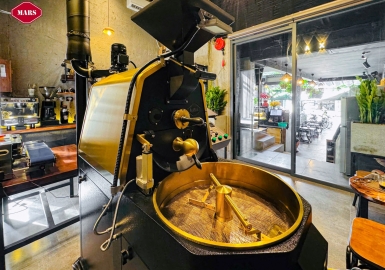


In coffee roasting, temperature is the key factor that directly determines the final flavor. Even a small deviation in temperature control can cause coffee beans to become sharply sour or burnt and bitter, reducing beverage quality and negatively impacting the customer experience. So why does failing to control roasting temperature lead to these flavor defects?
How important is temperature control in coffee roasting?
Coffee roasting is a combination of:
-
Temperature
-
Time
-
Airflow and roasting speed
When these factors are not controlled in harmony, the bean development process becomes disrupted. Among them, unstable temperature is the most common cause of sour or bitter flavor defects.
Uncontrolled roasting temperature causes sour coffee
Sour coffee usually results from under-roasting. When the temperature is:
-
Not high enough
-
Increased too slowly
-
Dropping unexpectedly during roasting
The acidic compounds inside the beans are not fully broken down. As a result, the coffee tastes:
-
Sharply sour
-
Thin-bodied
-
Short in aftertaste
This often happens in roasts without a clear temperature profile or when roasting relies mainly on intuition.
Excessive roasting temperature causes bitter coffee
On the other hand, when roasting temperature:
-
Rises too quickly
-
Exceeds the controllable threshold
-
Is not adjusted in time
The beans become over-roasted. At this stage, aromatic compounds burn, producing flavors that are:
-
Harshly bitter
-
Smoky or burnt
-
Heavy and unpleasant in aftertaste
Excessive heat can also scorch the bean surface while the inside remains underdeveloped, resulting in an unbalanced flavor.
Unstable temperature leads to uneven bean development
Another issue caused by poor temperature control is frequent temperature fluctuation throughout the roast, which leads to:
-
Unevenly roasted beans
-
Different levels of development among beans
-
A cup lacking harmony and consistency
This problem is common when using unstable roasters or equipment without accurate temperature monitoring systems.
The role of roast profiles in temperature control
A roast profile helps roasters to:
-
Clearly define temperature stages
-
Control the rate of temperature rise
-
Reproduce consistent flavor across multiple batches
Without a defined roast profile, temperature control relies heavily on experience and intuition, leading to inconsistencies between batches and uneven quality.
Solutions to reduce sour and bitter flavors
To effectively control temperature during coffee roasting, roasters should:
-
Use roasting machines with accurate temperature measurement and display
-
Monitor and adjust heat at each roasting stage
-
Apply supporting technologies such as semi-automatic roasting or AI-assisted systems
-
Record and optimize roast profiles for each type of bean
These solutions help maintain long-term flavor stability and product quality.
Uncontrolled roasting temperature is a primary cause of sour or bitter coffee, reducing product value and customer experience. Proper temperature control not only prevents flavor defects but also forms the foundation for developing a unique coffee style and building a professional roasting operation.
![[RECRUITMENT] COFFEE SALES– CONQUER THE CAMBODIAN MARKET WITH SUN LEE](thumbs/385x270x1/upload/news/cont-20-1963.png "[RECRUITMENT] COFFEE SALES– CONQUER THE CAMBODIAN MARKET WITH SUN LEE")